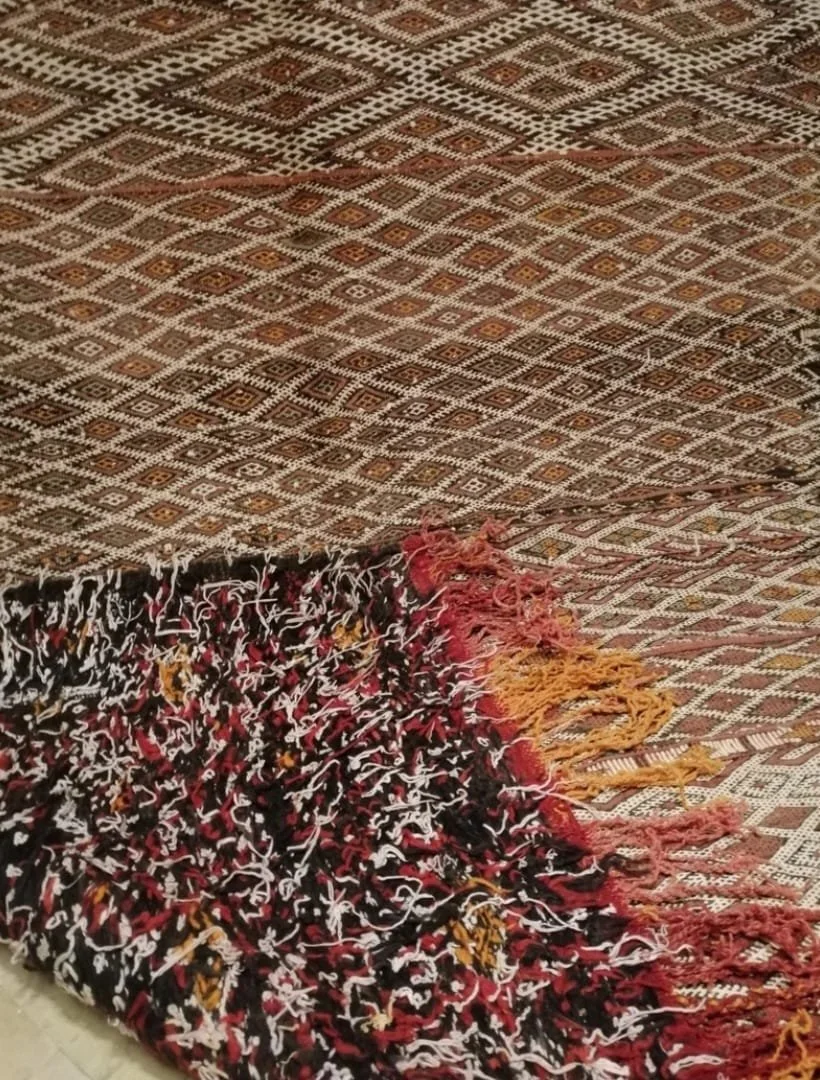
Vintage Amazigh Zayan Hanbel (1960s)
Handwoven Middle Atlas Flatweave | Embroidered Tribal Geometry | Museum-Grade Textile
Some textiles are decorative. Others are narrative.
This authentic Amazigh Zayan hanbel, woven in the Middle Atlas Mountains in the 1960s, belongs to the latter. It is not simply a rug—it is a woven record of daily life, identity, and lineage, created within a culture where textiles functioned as both utility and expression.
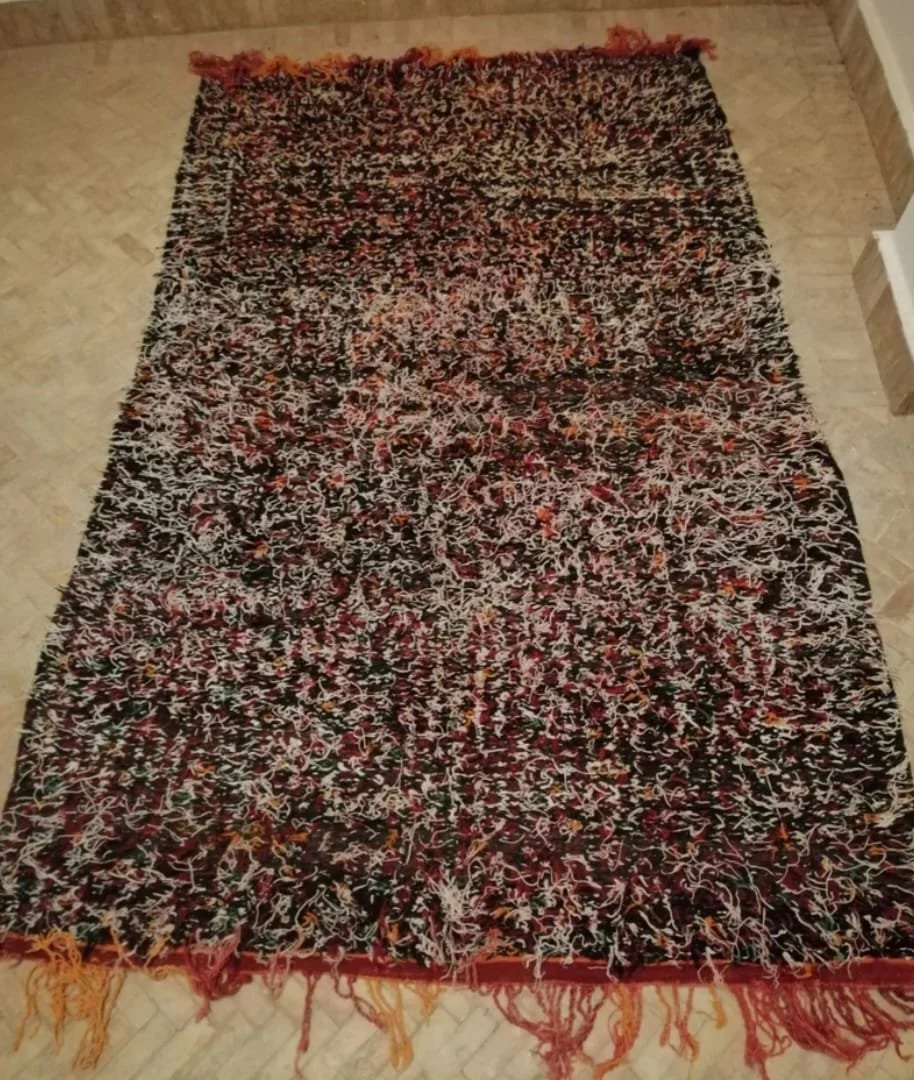
Unlike pile carpets made for warmth, a hanbel is a flatwoven textile, traditionally used as bedding, floor covering, or a multipurpose living surface. Pieces like this were often part of a bride’s dowry—woven over time, carrying intention in every thread.
Craftsmanship & Construction
Hand-spun sheep wool weft
Cotton warp foundation for strength and longevity
Dyed using natural pigments derived from earth and plant sources
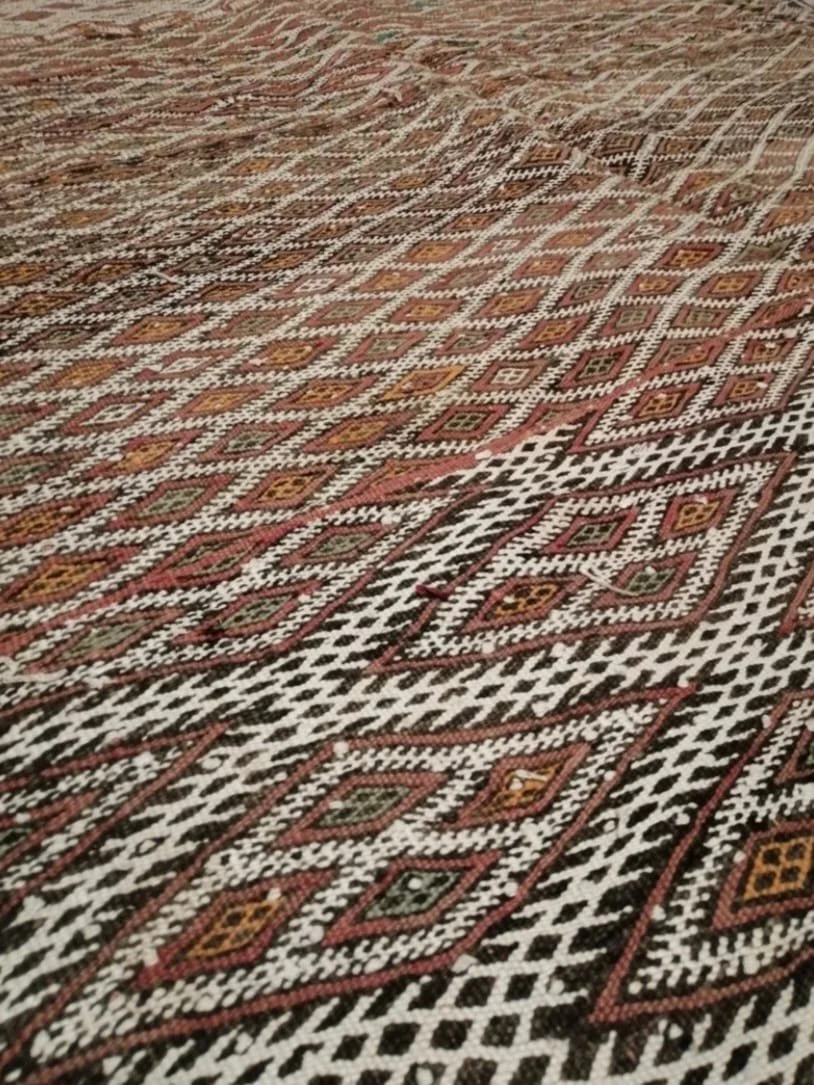
Fully handwoven, then hand-embroidered
Flatweave construction — thin, flexible, and highly durable
The addition of embroidery over the woven base is a hallmark of high-skill Zayan work, elevating this piece beyond standard utilitarian textiles into something far more intricate and expressive.
Design & Symbolism
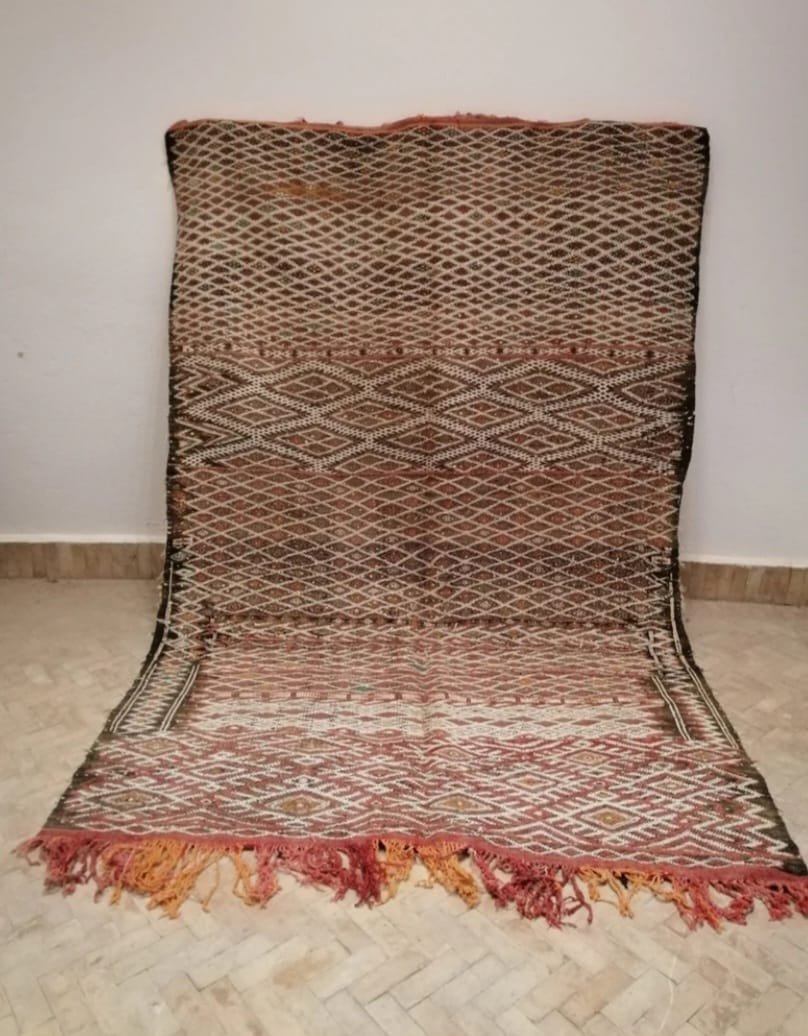
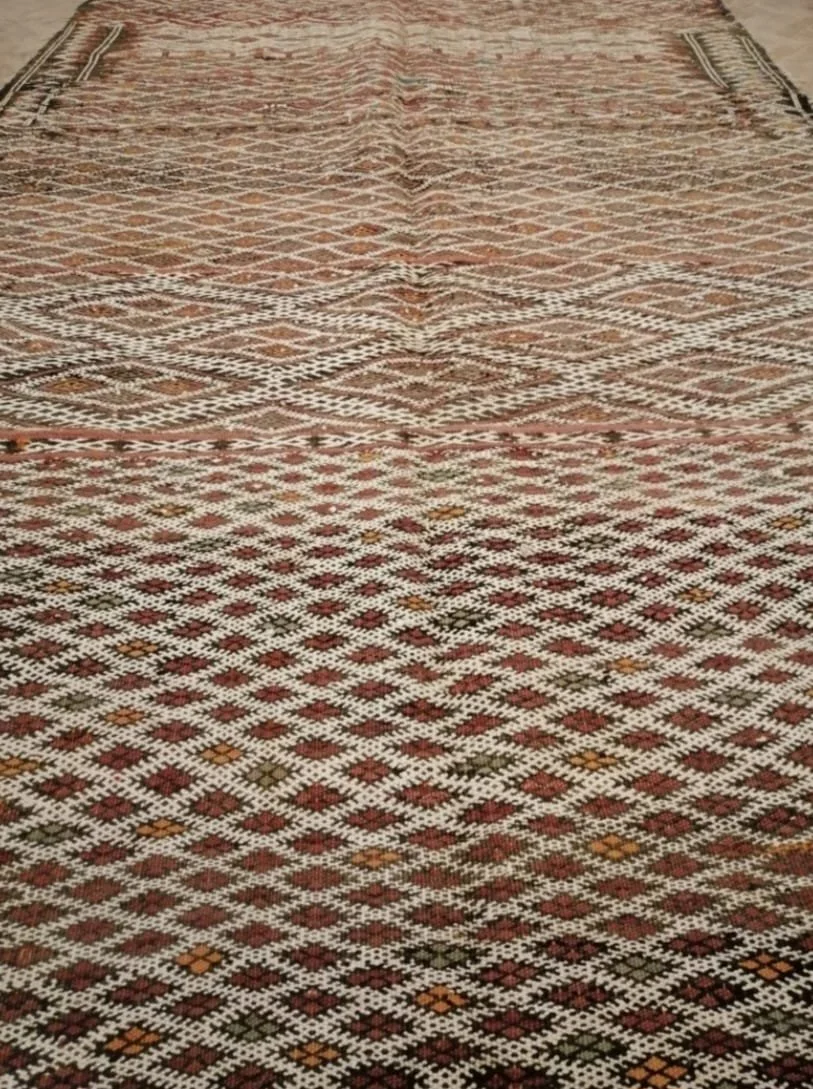
The composition is defined by a banded, non-repeating structure, a sophisticated departure from symmetrical repetition:
Horizontal bands shift in scale and density, guiding the eye across the surface
An internal “framed” section creates a subtle focal field, drawing attention inward
Repeating lozenges and stepped motifs reference:
Protection and continuity
Fertility and lineage
Movement through landscape and life stages
This asymmetry is intentional. It reflects a worldview not bound by rigid repetition, but by rhythm, variation, and lived experience.
Color & Material Expression
The palette is grounded in earth-derived tones, deeply characteristic of Zayan weaving traditions:
Ochre and clay reds
Burnt rust and iron-rich browns
Coffee and deep umber
Olive and muted vegetal greens
These are not applied colors—they are absorbed into the wool, softened over decades into a palette that feels organic, stable, and timeless.
Dimensions
2.55 m × 1.68 m
8 ft 4 in × 5 ft 6 in
Ideal for:
Living spaces
Layering over larger rugs
Wall display as a textile piece
Collectors seeking authentic flatweaves
Condition & Care
Very good vintage condition (1960s)
Structurally sound with natural age-related wear
Embroidery intact and well preserved
Care recommendations:
Gentle cold wash
Traditional snow cleaning preferred (preserves lanolin and fiber integrity)
Shipping
Worldwide shipping included in the price
Professionally packed and protected
Delivered ready for immediate use or display
Price
$3,300 USD (shipping included)
Why This Piece Stands Apart
Most hanbels available today fall into two categories:
Recently made for the tourist market
Or older pieces that have lost structural or visual integrity
This example sits in a rarer category:
True mid-20th century origin
High-detail embroidery over flatweave base
Strong preservation of both structure and symbolism
It represents a period when weaving was still embedded in daily life, not separated into production for sale.
Collector Notes
Zayan hanbels are increasingly sought after for:
Their graphic, modernist appearance
Their compatibility with contemporary interiors
Their rarity in well-preserved condition
This piece offers both visual impact and ethnographic depth, making it suitable for serious collectors as well as designers.
Handwoven Middle Atlas Flatweave | Embroidered Tribal Geometry | Museum-Grade Textile
Some textiles are decorative. Others are narrative.
This authentic Amazigh Zayan hanbel, woven in the Middle Atlas Mountains in the 1960s, belongs to the latter. It is not simply a rug—it is a woven record of daily life, identity, and lineage, created within a culture where textiles functioned as both utility and expression.
Unlike pile carpets made for warmth, a hanbel is a flatwoven textile, traditionally used as bedding, floor covering, or a multipurpose living surface. Pieces like this were often part of a bride’s dowry—woven over time, carrying intention in every thread.
Craftsmanship & Construction
Hand-spun sheep wool weft
Cotton warp foundation for strength and longevity
Dyed using natural pigments derived from earth and plant sources
Fully handwoven, then hand-embroidered
Flatweave construction — thin, flexible, and highly durable
The addition of embroidery over the woven base is a hallmark of high-skill Zayan work, elevating this piece beyond standard utilitarian textiles into something far more intricate and expressive.
Design & Symbolism
The composition is defined by a banded, non-repeating structure, a sophisticated departure from symmetrical repetition:
Horizontal bands shift in scale and density, guiding the eye across the surface
An internal “framed” section creates a subtle focal field, drawing attention inward
Repeating lozenges and stepped motifs reference:
Protection and continuity
Fertility and lineage
Movement through landscape and life stages
This asymmetry is intentional. It reflects a worldview not bound by rigid repetition, but by rhythm, variation, and lived experience.
Color & Material Expression
The palette is grounded in earth-derived tones, deeply characteristic of Zayan weaving traditions:
Ochre and clay reds
Burnt rust and iron-rich browns
Coffee and deep umber
Olive and muted vegetal greens
These are not applied colors—they are absorbed into the wool, softened over decades into a palette that feels organic, stable, and timeless.
Dimensions
2.55 m × 1.68 m
8 ft 4 in × 5 ft 6 in
Ideal for:
Living spaces
Layering over larger rugs
Wall display as a textile piece
Collectors seeking authentic flatweaves
Condition & Care
Very good vintage condition (1960s)
Structurally sound with natural age-related wear
Embroidery intact and well preserved
Care recommendations:
Gentle cold wash
Traditional snow cleaning preferred (preserves lanolin and fiber integrity)
Shipping
Worldwide shipping included in the price
Professionally packed and protected
Delivered ready for immediate use or display
Price
$3,300 USD (shipping included)
Why This Piece Stands Apart
Most hanbels available today fall into two categories:
Recently made for the tourist market
Or older pieces that have lost structural or visual integrity
This example sits in a rarer category:
True mid-20th century origin
High-detail embroidery over flatweave base
Strong preservation of both structure and symbolism
It represents a period when weaving was still embedded in daily life, not separated into production for sale.
Collector Notes
Zayan hanbels are increasingly sought after for:
Their graphic, modernist appearance
Their compatibility with contemporary interiors
Their rarity in well-preserved condition
This piece offers both visual impact and ethnographic depth, making it suitable for serious collectors as well as designers.