There’s something about this one that stops you for a second.
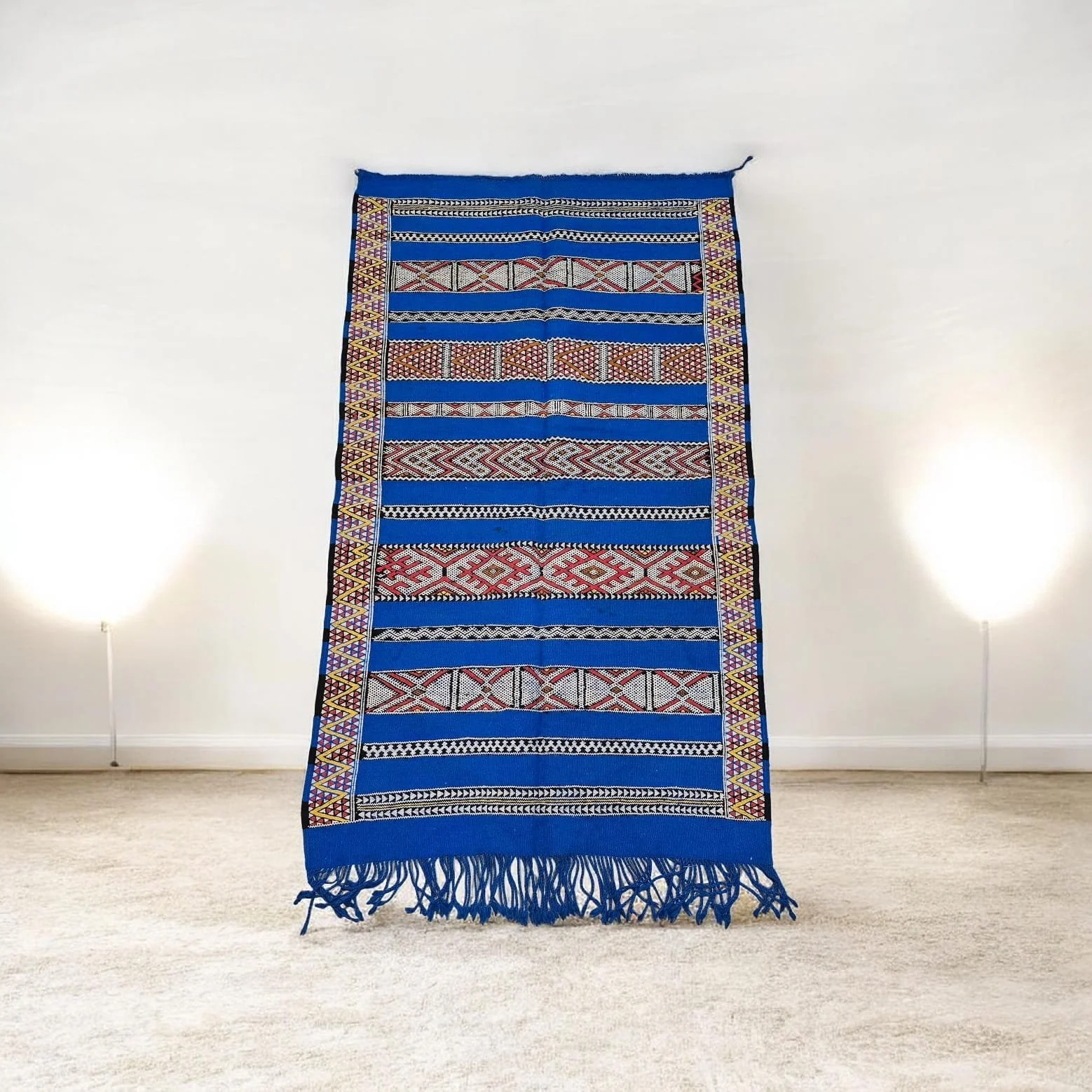
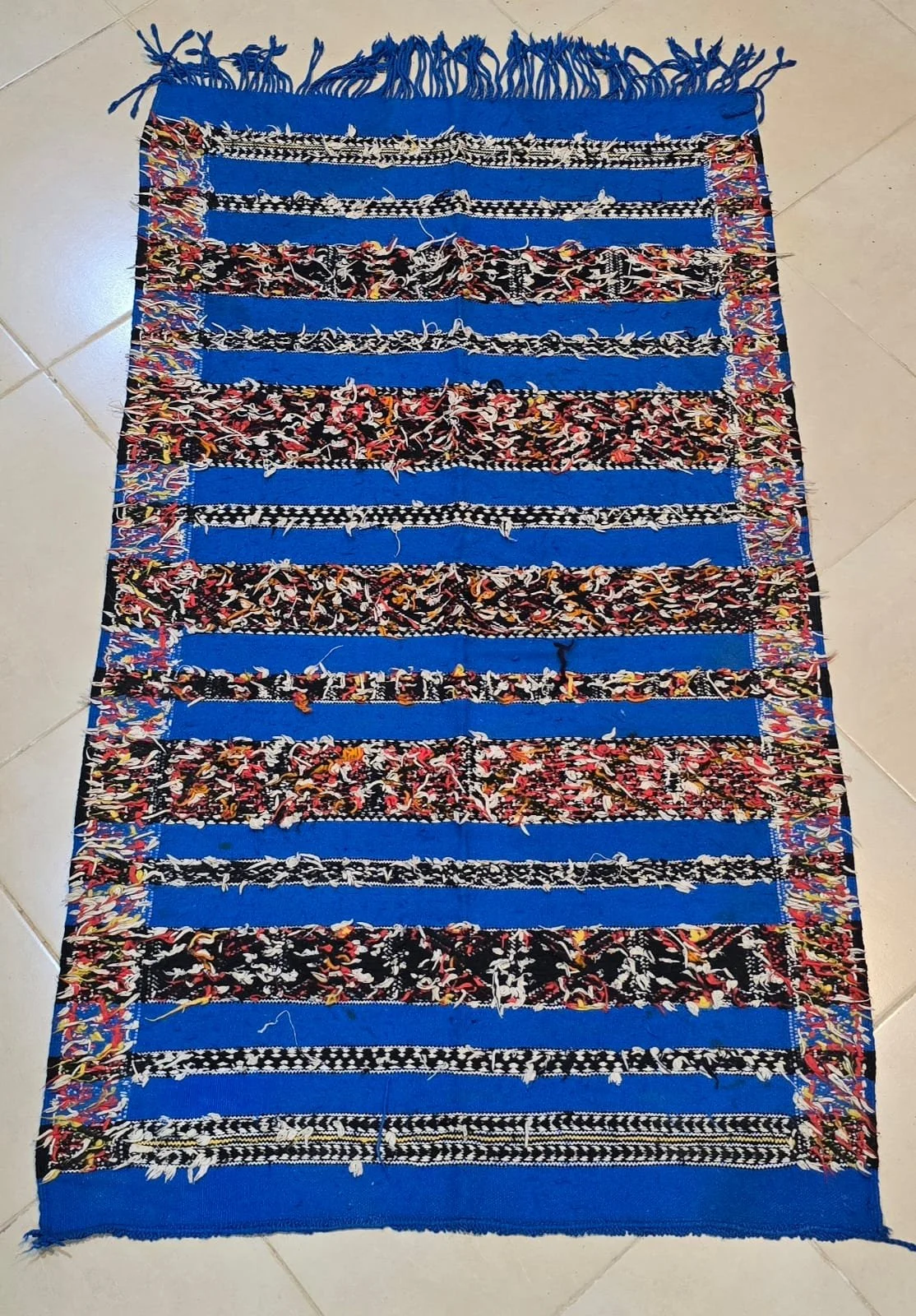
That deep blue field feels almost like sky at elevation in the Middle Atlas, broken only by bands of pattern that carry meaning passed down for generations.
This is a true Amazigh handwoven kilim from the Tifelt region, dating to the 1990s. A time when these pieces were still made for daily life, not for export, not for showrooms, but for homes, families, and real use.
Every line here has purpose.
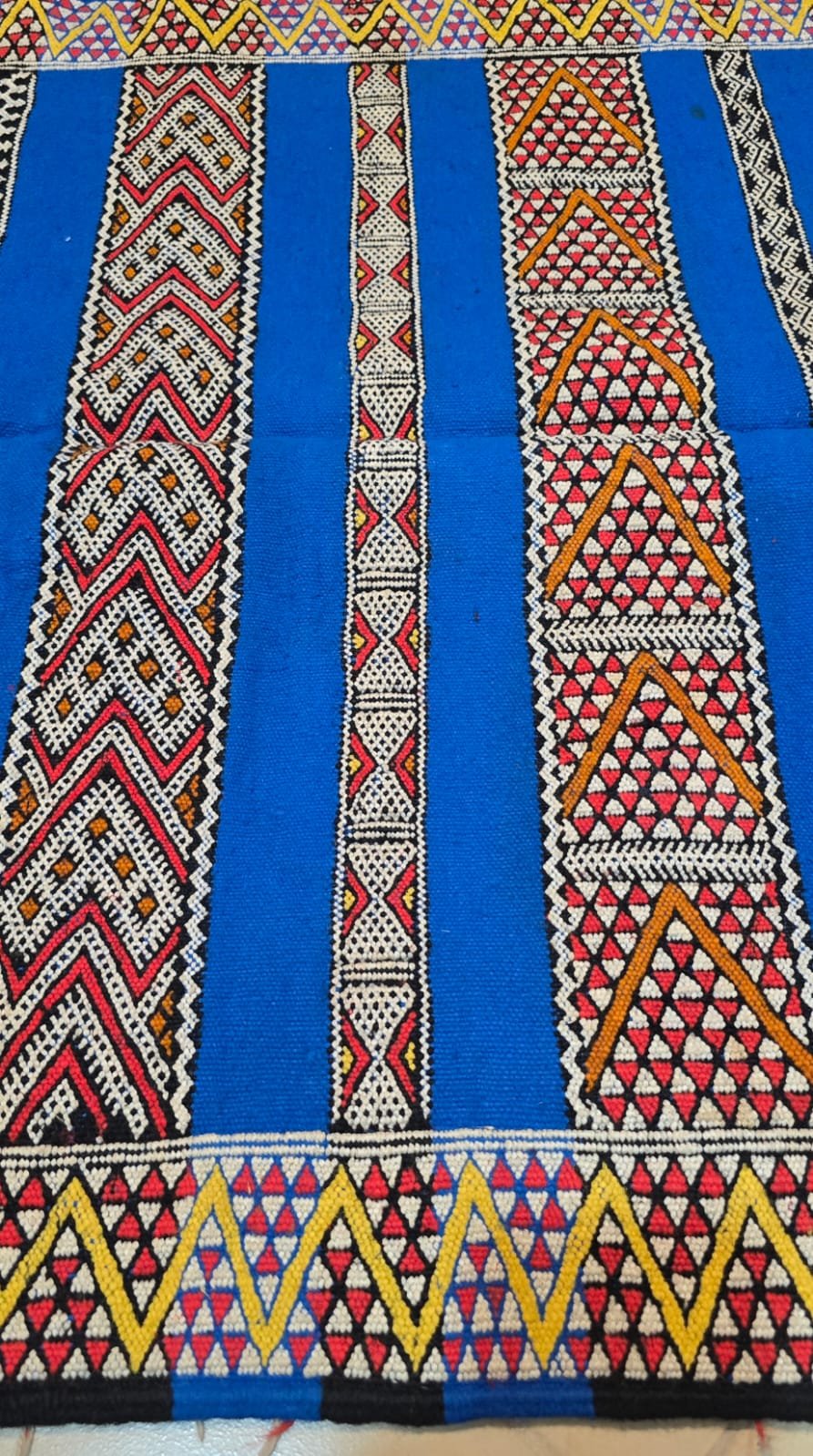
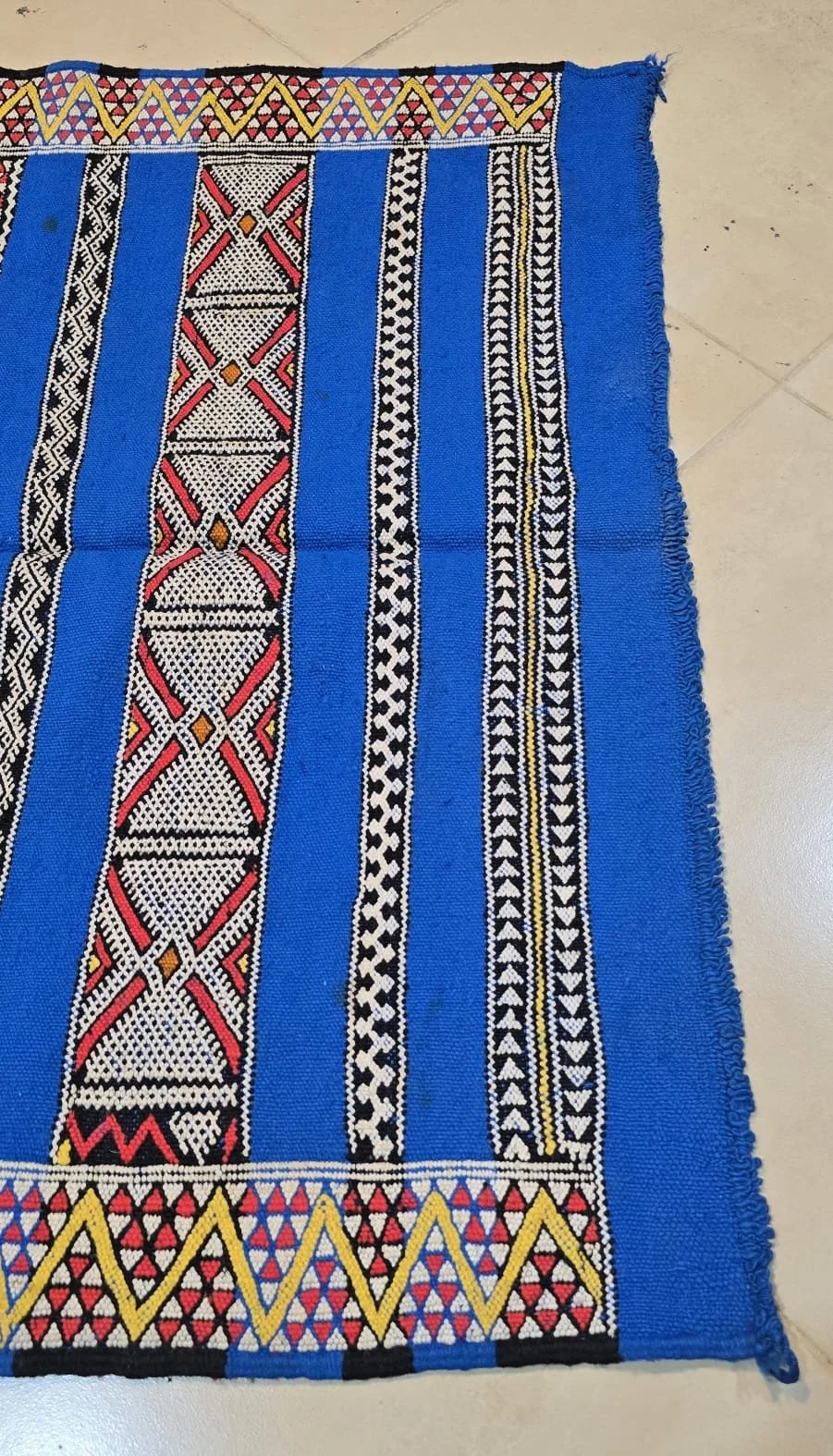
The zigzag patterns represent water and movement. Life flowing through otherwise harsh landscapes. The cross motifs are often interpreted as the eye of protection or a guiding star. The irregular diamond forms act as shields, meant to guard against negative energy and keep balance within the home.
Nothing about this is random.
It is tightly woven from sheep’s wool, with additional cotton and wool embroidery layered into the design, giving it both structure and texture. You can feel the difference when you run your hand across it. This is not machine made uniformity. This is human rhythm.
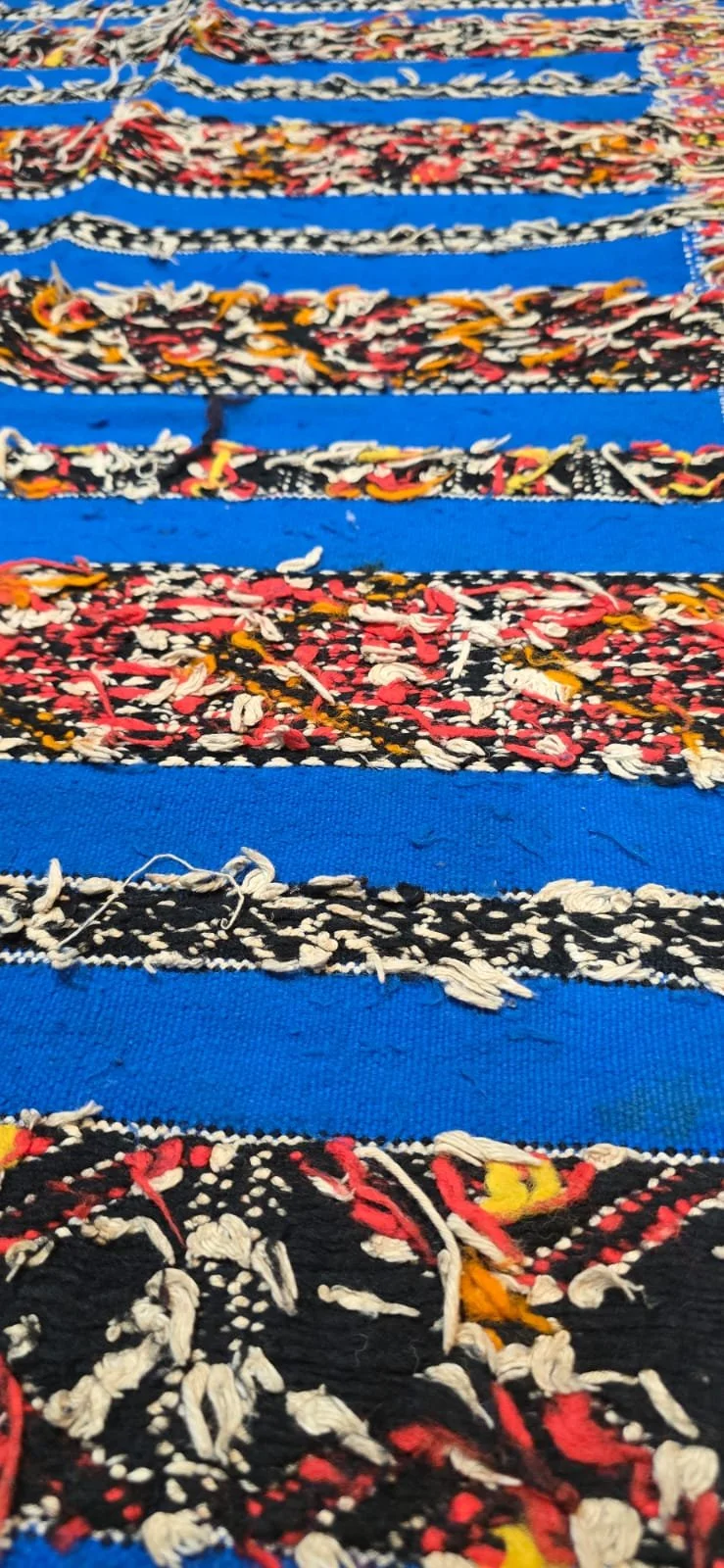
The back tells another story entirely, showing the raw construction and the life of the piece. Reversible, functional, and built to last.
This is the kind of rug that works anywhere. Floor, wall, studio, cabin, or layered into a larger collection. It carries presence without trying too hard.
Hand selected in Morocco through direct relationships with Amazigh artisans and regional markets, sourced during Wolf2Raven expeditions across the Atlas Mountains.
DETAILS SECTION
Region:
Tifelt, Middle Atlas Mountains, Morocco
Age:
Vintage, circa 1990s
Size:
1.43 m x 0.81 m
4.6 ft x 2.6 ft
Materials:
100 percent sheep’s wool foundation
Cotton and wool embroidery
Construction:
Flatwoven kilim with embroidered detailing
Condition:
Vintage condition with light signs of age consistent with handmade use
WHY THIS PIECE STANDS OUT
This piece hits differently because it balances three things most rugs don’t:
Color that actually commands a space
Symbolism with real cultural meaning
Durability from traditional weaving methods
It is not just decor. It is a lived object with history.
There’s something about this one that stops you for a second.
That deep blue field feels almost like sky at elevation in the Middle Atlas, broken only by bands of pattern that carry meaning passed down for generations.
This is a true Amazigh handwoven kilim from the Tifelt region, dating to the 1990s. A time when these pieces were still made for daily life, not for export, not for showrooms, but for homes, families, and real use.
Every line here has purpose.
The zigzag patterns represent water and movement. Life flowing through otherwise harsh landscapes. The cross motifs are often interpreted as the eye of protection or a guiding star. The irregular diamond forms act as shields, meant to guard against negative energy and keep balance within the home.
Nothing about this is random.
It is tightly woven from sheep’s wool, with additional cotton and wool embroidery layered into the design, giving it both structure and texture. You can feel the difference when you run your hand across it. This is not machine made uniformity. This is human rhythm.
The back tells another story entirely, showing the raw construction and the life of the piece. Reversible, functional, and built to last.
This is the kind of rug that works anywhere. Floor, wall, studio, cabin, or layered into a larger collection. It carries presence without trying too hard.
Hand selected in Morocco through direct relationships with Amazigh artisans and regional markets, sourced during Wolf2Raven expeditions across the Atlas Mountains.
DETAILS SECTION
Region:
Tifelt, Middle Atlas Mountains, Morocco
Age:
Vintage, circa 1990s
Size:
1.43 m x 0.81 m
4.6 ft x 2.6 ft
Materials:
100 percent sheep’s wool foundation
Cotton and wool embroidery
Construction:
Flatwoven kilim with embroidered detailing
Condition:
Vintage condition with light signs of age consistent with handmade use
WHY THIS PIECE STANDS OUT
This piece hits differently because it balances three things most rugs don’t:
Color that actually commands a space
Symbolism with real cultural meaning
Durability from traditional weaving methods
It is not just decor. It is a lived object with history.