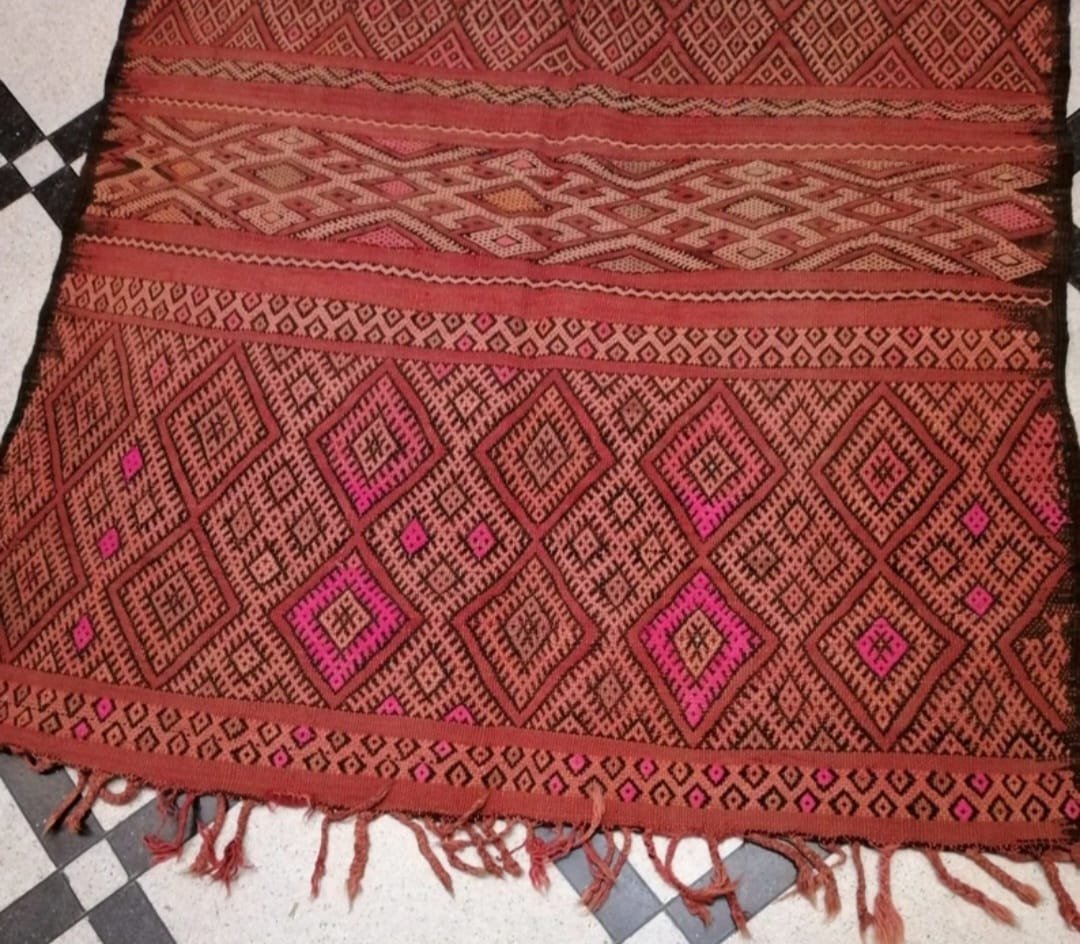
Vintage Amazigh Hanbel (1960s)
Handwoven Atlas Flatweave | Symbolic River Motif | Soft Desert Patina
Some pieces feel like they’ve lived a life before you ever see them.
This authentic Amazigh hanbel, woven in the 1960s in the Atlas Mountain region of Morocco, carries that unmistakable presence. The wool has softened over decades, the colors have settled into muted pinks and reds, and the entire surface feels like something shaped slowly by time rather than made all at once.
These were not created for markets—they were made for living.
Craftsmanship & Material
100% hand-spun sheep wool
Naturally dyed using mineral and plant-based pigments
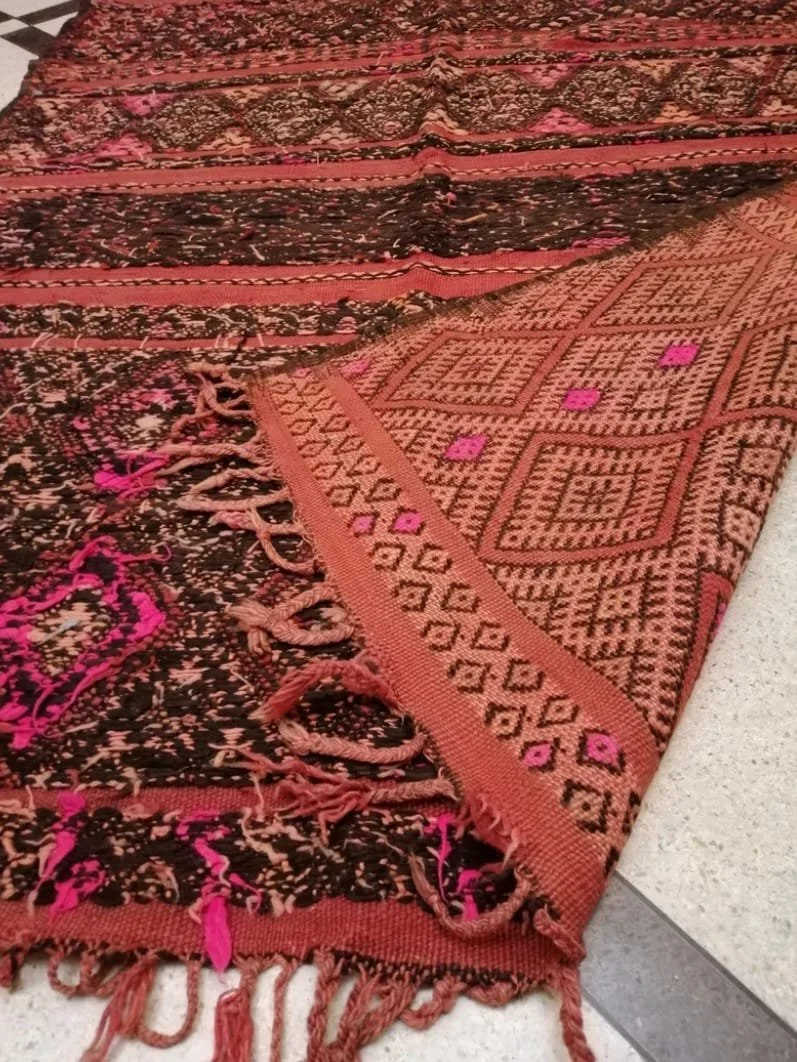
Fully handwoven flatweave construction
Thin, flexible, and highly durable
Lightweight yet strong — designed for everyday use in traditional settings
Hanbels like this were woven by Amazigh women for practical use within the home or tent, often over extended periods, with each section reflecting both intention and adaptation.
Design & Symbolism
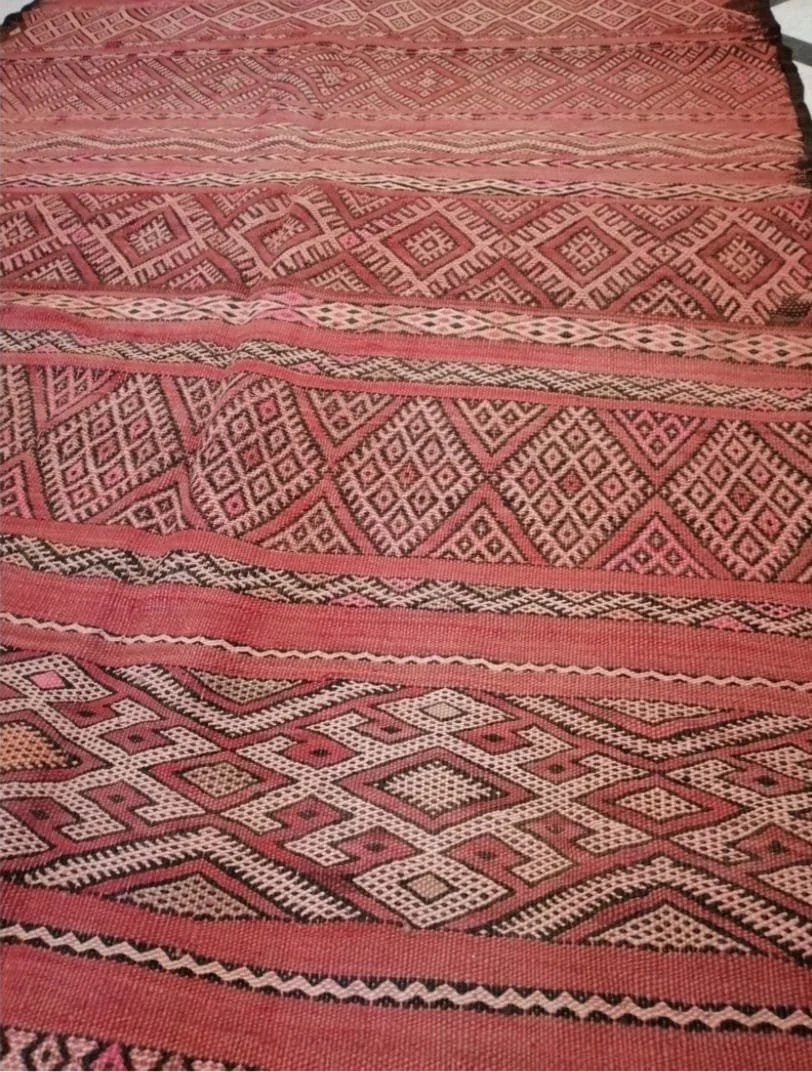
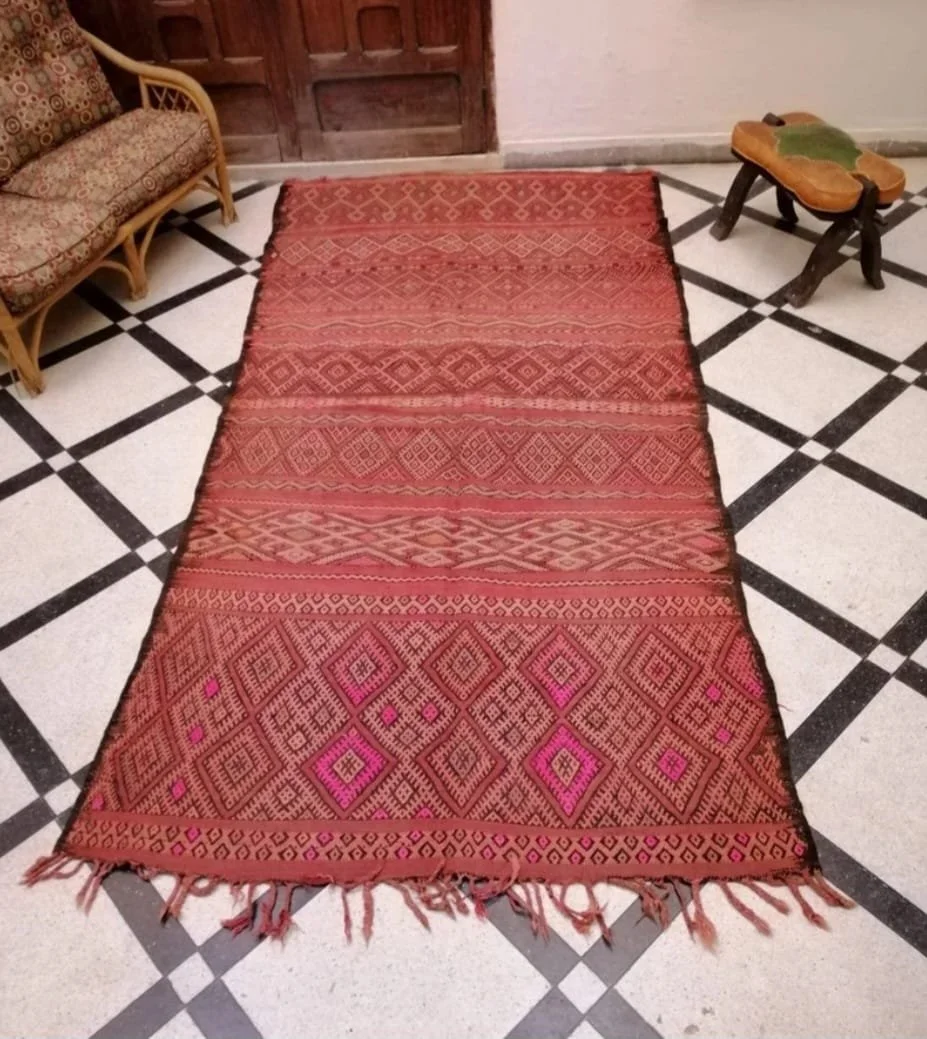
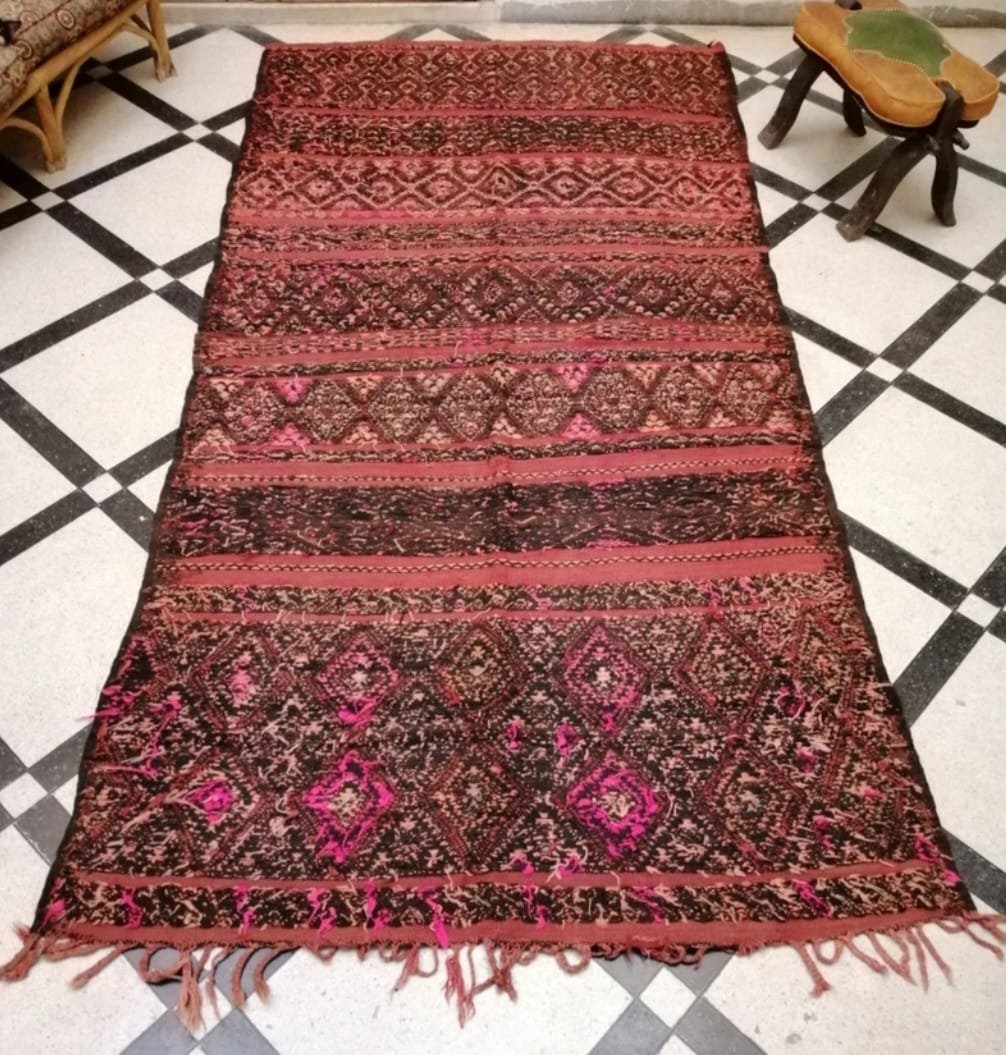
This piece features a banded, narrative structure, where each horizontal section shifts in pattern and density—creating movement rather than repetition.
Diamond Motifs
Prominent throughout the composition
Represent:
Feminine energy
Fertility
Protection (a symbolic shield)
Zigzag “River” Motif (Upper Field)
A defining element of this piece
Symbolizes:
Flowing water
Purification
Life and survival in arid environments
For semi-nomadic Amazigh communities, water is not just a resource—it is existence itself. The inclusion of this motif reflects a deep awareness of landscape and survival.
Integrated Meaning
Together, the motifs suggest a narrative of:
Protection of the household
Fertility and continuity
The sustaining and purifying force of water
This is not decorative symbolism—it is embedded belief woven into daily life.
Color & Patina
The palette is one of the most compelling aspects of this piece:
Washed-out pinks and softened reds
Cream and ivory highlights
Deep brown and charcoal patterning
Subtle tonal shifts across the surface from decades of natural aging
Unlike modern dyes, these colors have settled into the fiber, creating a muted, cohesive tone that works effortlessly in both traditional and contemporary spaces.
Form & Cultural Use
Hanbels are traditionally:
Long and narrow in format
Used as:
Interior tent dividers
Wall insulation in mountain or cave dwellings
Floor coverings or layered bedding
They functioned as a kind of Amazigh “architecture in textile form”—practical, movable, and deeply integrated into daily life.
Dimensions
2.93 m × 1.53 m
9 ft 7 in × 5 ft 0 in
Ideal for:
Hallways or narrow spaces
Layering in larger interiors
Wall display as a textile
Collector-focused placement
Condition & Care
Very good vintage condition (1960s)
Structurally sound with natural age-related wear
Fringe and weave remain intact
Care recommendations:
Cold water wash only
Traditional snow cleaning preferred
Avoid harsh chemicals to preserve natural fibers
Shipping
Worldwide shipping included in the price
Professionally packaged for safe delivery
Ready to use or display upon arrival
Price
$1,900 USD (shipping included)
Why This Piece Stands Apart
Many hanbels available today are:
Recently made for the tourist market
Chemically treated for artificial aging
Or lacking the depth of original symbolic structure
This piece stands apart because it is:
Authentically mid-20th century
Rich in symbolic composition
Preserved with its original character intact
It reflects a time when weaving was not separate from life—it was life.
Collector Insight
Pieces like this are increasingly sought after for:
Their graphic, modernist appeal
Their cultural and symbolic authenticity
Their versatility in contemporary interiors
This example offers a rare balance of:
Strong design
Meaningful symbolism
Natural aging and patina
Handwoven Atlas Flatweave | Symbolic River Motif | Soft Desert Patina
Some pieces feel like they’ve lived a life before you ever see them.
This authentic Amazigh hanbel, woven in the 1960s in the Atlas Mountain region of Morocco, carries that unmistakable presence. The wool has softened over decades, the colors have settled into muted pinks and reds, and the entire surface feels like something shaped slowly by time rather than made all at once.
These were not created for markets—they were made for living.
Craftsmanship & Material
100% hand-spun sheep wool
Naturally dyed using mineral and plant-based pigments
Fully handwoven flatweave construction
Thin, flexible, and highly durable
Lightweight yet strong — designed for everyday use in traditional settings
Hanbels like this were woven by Amazigh women for practical use within the home or tent, often over extended periods, with each section reflecting both intention and adaptation.
Design & Symbolism
This piece features a banded, narrative structure, where each horizontal section shifts in pattern and density—creating movement rather than repetition.
Diamond Motifs
Prominent throughout the composition
Represent:
Feminine energy
Fertility
Protection (a symbolic shield)
Zigzag “River” Motif (Upper Field)
A defining element of this piece
Symbolizes:
Flowing water
Purification
Life and survival in arid environments
For semi-nomadic Amazigh communities, water is not just a resource—it is existence itself. The inclusion of this motif reflects a deep awareness of landscape and survival.
Integrated Meaning
Together, the motifs suggest a narrative of:
Protection of the household
Fertility and continuity
The sustaining and purifying force of water
This is not decorative symbolism—it is embedded belief woven into daily life.
Color & Patina
The palette is one of the most compelling aspects of this piece:
Washed-out pinks and softened reds
Cream and ivory highlights
Deep brown and charcoal patterning
Subtle tonal shifts across the surface from decades of natural aging
Unlike modern dyes, these colors have settled into the fiber, creating a muted, cohesive tone that works effortlessly in both traditional and contemporary spaces.
Form & Cultural Use
Hanbels are traditionally:
Long and narrow in format
Used as:
Interior tent dividers
Wall insulation in mountain or cave dwellings
Floor coverings or layered bedding
They functioned as a kind of Amazigh “architecture in textile form”—practical, movable, and deeply integrated into daily life.
Dimensions
2.93 m × 1.53 m
9 ft 7 in × 5 ft 0 in
Ideal for:
Hallways or narrow spaces
Layering in larger interiors
Wall display as a textile
Collector-focused placement
Condition & Care
Very good vintage condition (1960s)
Structurally sound with natural age-related wear
Fringe and weave remain intact
Care recommendations:
Cold water wash only
Traditional snow cleaning preferred
Avoid harsh chemicals to preserve natural fibers
Shipping
Worldwide shipping included in the price
Professionally packaged for safe delivery
Ready to use or display upon arrival
Price
$1,900 USD (shipping included)
Why This Piece Stands Apart
Many hanbels available today are:
Recently made for the tourist market
Chemically treated for artificial aging
Or lacking the depth of original symbolic structure
This piece stands apart because it is:
Authentically mid-20th century
Rich in symbolic composition
Preserved with its original character intact
It reflects a time when weaving was not separate from life—it was life.
Collector Insight
Pieces like this are increasingly sought after for:
Their graphic, modernist appeal
Their cultural and symbolic authenticity
Their versatility in contemporary interiors
This example offers a rare balance of:
Strong design
Meaningful symbolism
Natural aging and patina